
Last Updated: October 24, 2026
Quick Summary
Affordable custom framing means understanding what drives costs and avoiding mistakes that compound expenses, not just finding the lowest price. Choosing the right materials, sizing accurately, and using matting protects your print's longevity while keeping costs reasonable.
- Skipping matting to save $20-30 causes prints to fade, stick to glass, or develop mold within years.
- Acrylic provides better UV protection and durability than glass while costing less and handling shipping better.
- Ordering the wrong frame size wastes your entire investment and requires costly modifications or reframing.
- Online services offer competitive pricing for standard sizes, while local shops excel for unusual sizes and valuable pieces.
- Hidden shipping fees and assembly charges can add $25-30 to advertised frame prices at checkout.
Table of Contents
- Why Affordable Custom Framing Requires More Than Just Shopping Price
- Understanding Custom Picture Framing Cost: What Actually Drives the Price
- Online Framing Services vs. Local Shops: Where You Actually Save
- How to Choose a Frame for an Art Print Without Overspending
- DIY Framing for Art Prints: When It Works and When It Costs More
- Five Mistakes That Turn Affordable Framing Into Expensive Regret
- Getting Your Print Ready: Measurement and Preparation Before Ordering
- Start Your Framing Order With Confidence
- Frequently Asked Questions
Why Affordable Custom Framing Requires More Than Just Shopping Price
The cheapest frame isn't always the best deal. That's the core tension running through this guide. Most people assume affordable custom framing means finding the lowest price tag, but the real savings come from understanding what actually drives costs and avoiding decisions that compound expenses later.
When you're framing an art print, you're making choices about materials, sizing, and protection that interact with each other. A poor choice in one area forces you to overspend elsewhere. Skip matting to save $15 upfront, and your print fades in six months.
This guide walks you through the actual cost drivers, the mistakes that waste money, and the decisions that protect your investment.
Understanding Custom Picture Framing Cost: What Actually Drives the Price
Custom picture framing cost breaks down into distinct components, and understanding each one changes how you shop. The frame itself is just the starting point.
The largest variable is usually the frame material. Wood frames range widely depending on species and finish. Metal frames cost differently than wood.
Labor is the second major cost driver. Online services keep labor costs low by automating the process and using standardized sizes.
Shipping adds a hidden expense, especially for larger prints. A framed piece is fragile and heavy. Protective packaging, insurance, and delivery logistics cost real money. Some services absorb this into their pricing. Others charge separately.
Online Framing Services vs. Local Shops: Where You Actually Save
This is where the math gets interesting. Online framing services and local frame shops serve different purposes, and pretending they're interchangeable costs money.
Online framing services win on price because they've eliminated most labor costs. According to The New York Times Wirecutter, testing found that online services offer competitive pricing for standard print sizes, with some options starting as low as what local shops charge for consultation alone.
Local frame shops excel when you have unusual sizes, rare materials, or specific restoration needs. A local framer can source archival materials, handle delicate vintage prints, and solve problems an online system can't address. You pay for expertise, but that expertise prevents expensive mistakes.
The hybrid approach works well for many people: use online services for standard prints you're confident about, and visit a local shop for anything that requires judgment calls. This strategy splits the difference between cost and quality.
How to Choose a Frame for an Art Print Without Overspending
Choosing the right frame is where most people go wrong.
Start with the print itself. What's the subject matter? What's the color palette? The frame should complement, not compete.
Next, consider the space where the print will hang. A minimalist living room calls for clean lines and neutral tones.
Material matters more than most people realize. Wood frames feel warm and traditional. Metal frames read modern and clean. The finish, matte, glossy, distressed, changes the entire effect.
Size is critical. The frame width affects how the print reads on the wall. A thin frame makes a print feel delicate.
DIY Framing for Art Prints: When It Works and When It Costs More
DIY framing appeals to budget-conscious people, but it's a trap more often than not. Sometimes it works. Often it doesn't.
DIY framing makes sense for prints you don't care about much, posters, casual art, things you might replace in a year. The stakes are low. If it looks imperfect, it doesn't matter.
DIY framing fails when you're trying to frame something valuable or when you lack the right tools. A valuable print needs archival-quality materials and proper protection.
The time cost matters too. Framing by hand takes hours if you've never done it. Those hours have value. Factor that into the calculation. For most people, the math favors paying a professional.
Five Mistakes That Turn Affordable Framing Into Expensive Regret
This section identifies the specific decisions that blow budgets. Avoid these, and your framing costs stay reasonable.
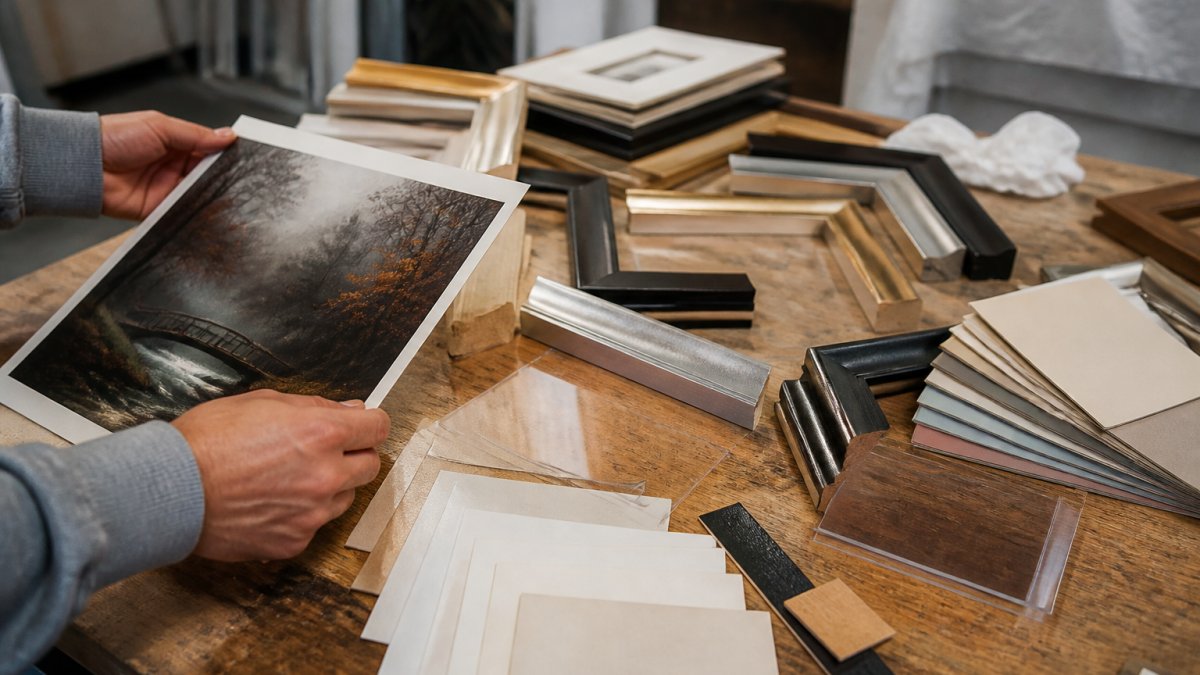
Mistake 1: Choosing Glass Over Acrylic to Save $10 Upfront
Glass looks better. It's clearer, more reflective, and feels premium. Acrylic looks slightly hazy in comparison. So people choose glass to save money or feel like they're getting better quality.
This is backwards. Acrylic is the better choice for most prints, and it costs less. Glass is heavier, more fragile, and prone to reflection that obscures the print. Acrylic is lightweight, durable, and provides better UV protection.
The mistake happens because people judge materials by how they look in the store, not how they perform over time. Glass looks fancy. Acrylic looks cheap. But in your home, acrylic protects your print better and handles shipping and moving without breaking.
Mistake 2: Skipping Matting to Cut Costs Immediately
Matting feels optional. It's an extra layer between your print and the frame. Skipping it saves $20 or $30. So people skip it.
This is one of the most expensive mistakes you can make. Matting serves a critical function: it creates space between your print and the glazing, preventing the print from touching the glass.
A print without matting looks flat and cheap. A print with matting looks intentional and finished. The visual difference is dramatic. Matting also extends the life of your print by decades.
Quality matting uses acid-free board that won't yellow or degrade over time. Cheap matting will. If you're going to mat your print, do it right.
Mistake 3: Ordering a Frame Size That Doesn't Match Your Print
This happens constantly. Someone orders a frame, receives it, and discovers their print doesn't fit properly.
The root cause is usually not measuring carefully. People eyeball dimensions or misread specifications. They order a frame for an 8x10 print when their actual print is 8x12.
Measure twice. Measure your print's exact dimensions. Then measure the frame's interior opening. Verify that the mat opening (if you're using matting) aligns with your print size.
If your print is an unusual size, expect to pay more for custom sizing. That's fine. The alternative is a print that doesn't fit properly, which looks wrong and wastes the entire investment.
Mistake 4: Ignoring Archival and Conservation Options
Archival framing uses materials that preserve prints over decades or centuries. Conservation framing goes further, using specialized techniques for valuable or delicate pieces.
Most people ignore this because it costs more. They frame a print with standard materials and assume it will last. Some prints will. Others will fade, yellow, or deteriorate within years.
The question to ask yourself: will I care about this print in five years? In ten? If yes, archival materials are worth the cost. If you're framing a poster you'll replace next year, standard materials are fine.
Archival materials include acid-free matting, UV-protective glazing, and lignin-free backing. These cost more upfront but protect your print's appearance and longevity. For a print you genuinely value, the extra cost is insurance.
Mistake 5: Not Accounting for Shipping and Hidden Fees
Online framing services advertise low prices, then add shipping at checkout. That $50 frame becomes $80 after shipping. Local services sometimes add frame assembly fees, mat cutting fees, or packaging charges.
Read the fine print before ordering. Understand what's included in the quoted price. Ask about shipping costs, assembly fees, and any other charges that might appear at checkout.
Also consider return shipping if something arrives damaged. Some services cover return shipping. Others make you pay. That's a significant difference if your frame arrives with a problem.
These five decisions commonly waste framing budgets by creating problems that cost more to fix than preventing them upfront.
| Mistake | Why It Happens | The Cost Impact |
|---|---|---|
| Choosing glass over acrylic | Glass looks premium in the store | Glass is heavier, fragile, and reflects light that obscures prints |
| Skipping matting to save $20-30 | Matting feels optional and decorative | Print touches glass, fades, sticks, or develops mold |
| Ordering wrong frame size | Not measuring print dimensions carefully | Print doesn't fit, needs trimming, or frame sits unused |
| Ignoring archival materials | Costs more upfront than standard options | Print fades, yellows, or deteriorates within years |
| Not accounting for shipping fees | Services advertise low prices then add charges | $50 frame becomes $80 after shipping and hidden fees |
Getting Your Print Ready: Measurement and Preparation Before Ordering
Before you order a frame, prepare your print properly.
Measure your print's dimensions in inches. Measure the width, height, and depth (if it's a thick canvas or specialty print). Write these down. Don't estimate.
Check the print's condition. Are there tears, creases, or stains? If so, mention this when ordering. A professional framer can sometimes work around minor damage.
If you're ordering online, verify that the service accepts your print type. Some services work with paper prints only. Others handle canvas, metal, or acrylic.
Consider the print's value and longevity. Is this a piece you'll treasure for years, or something temporary?
Start Your Framing Order With Confidence
Affordable custom framing isn't about finding the cheapest option. It's about understanding what drives costs, avoiding decisions that compound expenses, and making choices that protect your investment.
The mistakes outlined here are expensive because they seem small at the time. A $10 difference in glass versus acrylic. A $20 savings from skipping matting.
The path to true affordability is different. Understand the cost drivers. Make intentional choices about materials and sizing. Use online services for standard prints and local shops for anything complex.
Mind-Meld Gallery offers custom framing options designed for artists and art buyers who want quality without excess cost.
Frequently Asked Questions
What affects the cost of custom framing for art prints?
Frame material (wood, metal, composite), glazing choice (glass vs. acrylic), mat board quality, print size, and whether you choose archival-grade materials all impact price. Online framing services typically cost less than local shops because they reduce labor overhead. A Wirecutter test found Keepsake Frames offered an 8 × 10 frame for $62, showing affordable options exist. Shipping, rush processing, and custom finishes add to the total.
Is online custom framing cheaper than framing in a store?
Online framing services generally cost less because they eliminate physical retail space and staffing costs. Local frame shops offer personalized guidance and immediate turnaround but charge premium prices for that service. Online services work well if you know your frame style and size; local shops suit those who want hands-on consultation. Compare total cost including shipping before deciding.
How can I frame an art print on a budget?
Choose acrylic glazing instead of glass, skip premium matting unless your print is valuable, use standard frame sizes (8×10, 11×14) rather than custom dimensions, and order from online framing services. Skip archival upgrades for prints you plan to replace seasonally. DIY framing works for simple prints but costs more if you buy materials piecemeal. Check for sales or bundle discounts when ordering multiple frames at once.
What's the difference between affordable custom framing and cheap framing?
Affordable framing offers good value through smart material choices and efficient services without sacrificing quality. Cheap framing often uses low-grade materials, thin frames, or non-archival mat board that damage prints over time. Affordable custom framing balances durability, appearance, and price; cheap options prioritize price alone and may cost more in the long run if your artwork deteriorates or you need replacement.
The real cost of framing isn't the price you pay at checkout, it's the cost of getting it wrong. Avoid these five mistakes, measure carefully, and choose materials that match the print's value. That's how affordable custom framing actually works.
