
Last Updated: November 1, 2026
Quick Summary
Choose your metal print size by measuring the wall and the furniture beneath it, then sizing art at roughly 60 to 75 percent of that width. For example, above an 84-inch sofa, aim for a print about 50 to 63 inches wide. Tape a paper template at the exact dimensions before ordering.
- Center art at eye level, about 57 to 60 inches from the floor, on bare walls.
- Above furniture, hang the bottom edge 6 to 10 inches above the sofa back or headboard.
- Small prints run up to 16 x 20 inches; large prints start at 30 x 40 and up.
- Aim for around 150 PPI at final print size for a sharp metal print.
- Avoid hanging a glossy metal print directly opposite a bright window.
Table of Contents
- How to Measure Wall Art: The First Step Before Choosing a Metal Print Size
- The Wall Art Size Calculator: A Simple Formula with Worked Examples
- Metal Print Size Above Sofa: Getting the Proportions Right
- How High to Hang Wall Art: Height Rules That Actually Work
- Small, Medium, and Large Metal Prints: Matching Scale to Your Room
- Common Print Dimensions, Aspect Ratios, and Composition
- Resolution, Glare, and Mounting: Metal-Specific Checks Before You Order
- Previewing Your Metal Print Size and Ordering with Confidence
- Frequently Asked Questions
How to Measure Wall Art: The First Step Before Choosing a Metal Print Size
Choosing the right metal print size for walls starts with a tape measure, not a catalog. Buyers often regret a rushed size choice.
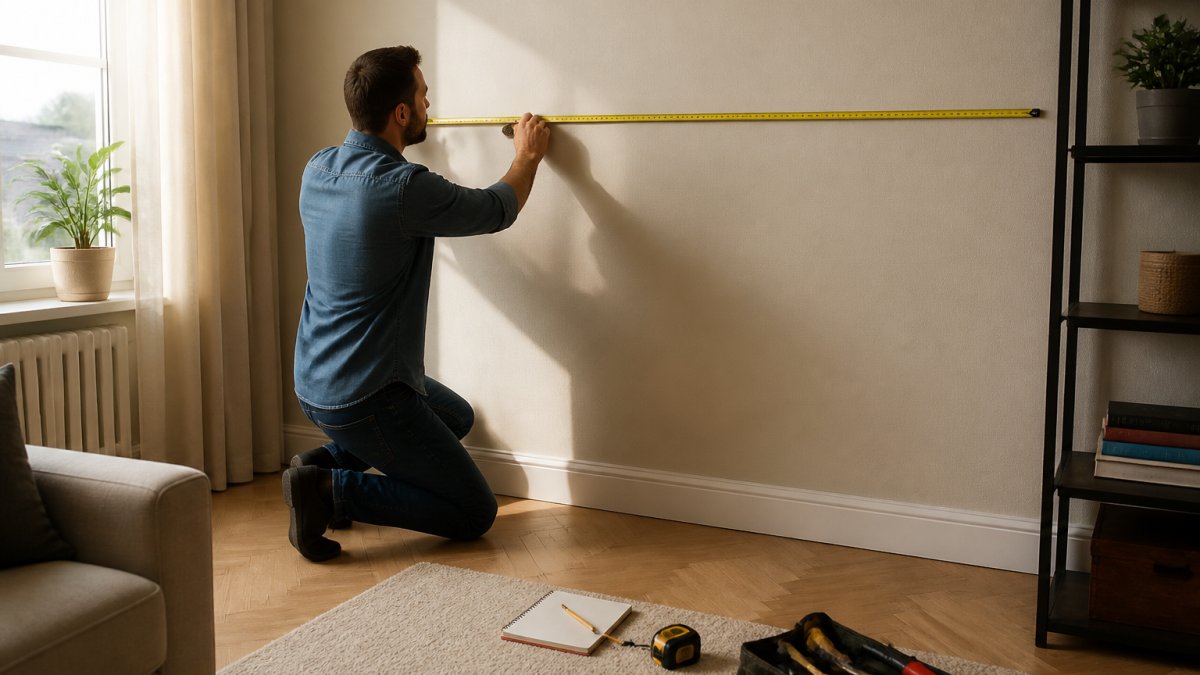
Measure the wall width and height in inches. Mark the total space you can dedicate to art, not just the spot where a nail might go.
Then account for furniture. A sofa, bed, or console anchors the art above it. Measure that piece's width too.
Measure wall width and height
Start with the full wall, then subtract obstacles. Windows, doors, and built-ins eat usable space.
- Measure total wall width and height in inches
- Note any trim, outlets, or vents
- Record the clear space between obstacles
Write these numbers down. You will use them in the calculator below.
Account for furniture placement
Furniture sets the visual anchor. Art should relate to the sofa or bed beneath it, not float alone.
Measure the width of the sofa, bed, or console. That number becomes your reference point. A common approach is to size art at roughly two-thirds to three-quarters of the furniture width.
A smaller piece above a wide sofa looks lost. A piece wider than the sofa looks top-heavy.
The Wall Art Size Calculator: A Simple Formula with Worked Examples
The wall art size calculator method is a starting ratio, not a law. Different guides recommend different proportions; pick one and stay consistent.
Here is the formula we suggest:
Art width = wall or furniture width × 0.60 to 0.75
Use the furniture width for art hung above a sofa or bed. Use the full wall width for a standalone statement piece.
The 60-75% rule for wall space
This rule keeps art proportional to its setting. Too small and the wall swallows it. Too large and it crowds the room.
- 60%: safe, conservative, works in small rooms
- 70%: balanced, our default recommendation
- 75%: bold, best on large walls with high ceilings
Treat these as guidelines. A large print is not automatically excessive on a large wall.
Worked example: 12-foot living room wall
A twelve-foot wall is 144 inches wide. A sofa beneath it measures 84 inches.
- Sofa-based sizing: 84 × 0.70 = about 59 inches wide
- Wall-based sizing: 144 × 0.70 = about 101 inches wide
For a single print above the sofa, aim for roughly 58 to 63 inches wide. For a statement piece on the bare wall, 96 to 108 inches works. That range fits a large panoramic metal print well.
Metal Print Size Above Sofa: Getting the Proportions Right
The metal print size above sofa question comes up constantly. The answer depends on the sofa width and the gap you leave around the art.
Use these ranges as a starting point:
| Sofa Width | Suggested Art Width | Suggested Height |
|---|---|---|
| 60 in | 36-45 in | 24-30 in |
| 72 in | 43-54 in | 28-36 in |
| 84 in | 50-63 in | 32-42 in |
| 96 in | 58-72 in | 36-48 in |
Leave 6 to 12 inches of breathing room on each side. Center the art over the sofa, not over the room.
A grouped set of three smaller panels can also work. Space panels 2 to 4 inches apart.
How High to Hang Wall Art: Height Rules That Actually Work
How high to hang wall art trips up most first-time buyers. The standard rule: center the art at eye level, about 57 to 60 inches from the floor.
Above furniture, use a different anchor. Hang art so its bottom edge sits 6 to 10 inches above the sofa back or headboard.
- Eye-level rule: center at 57-60 inches for bare walls
- Furniture rule: bottom edge 6-10 inches above the piece
- High ceilings: nudge the center up slightly, but keep it reachable
The Spruce's guide to hanging art at the right height walks through these measurements in more detail.
Small, Medium, and Large Metal Prints: Matching Scale to Your Room
Match artwork scale to room dimensions, not to personal taste alone. A print that feels right in a hallway can overpower a bedroom. The bands below are starting points, not rules, but they give you a concrete place to begin.
| Band | Typical dimensions (inches) | Best rooms | Why it works there |
|---|---|---|---|
| Small | up to 16 × 20 | hallways, bathrooms, above a desk, gallery-wall clusters | Fits narrow clear space and reads at close viewing distance |
| Medium | 20 × 30 to 24 × 36 | bedrooms, dining nooks, above a dresser or console | Anchors a secondary wall without dominating the room |
| Large | 30 × 40 and up | living rooms, above a sofa, open-plan spaces | Holds its own against wide walls and long viewing distances |
Small rooms and single statement pieces
In a small room, one statement piece beats a cluster of small frames. A single 24 × 36 metal print can anchor a bedroom wall without clutter. For a compact living room, a 30 × 40 print above the sofa reads as bold but not overwhelming.
Two checks keep a statement piece from becoming a mistake:
- Wall-width check: the print should cover roughly 60-75% of the furniture width beneath it (see the calculator section above). A 30 × 40 print is 30 inches wide, so it suits a sofa or dresser about 40-50 inches wide, not an 84-inch sectional.
- Ceiling-height check: leave at least 6-12 inches of wall above the top edge. In a room with 8-foot ceilings, a 40-inch-tall print hung with its bottom edge 8 inches above a sofa back leaves about 30 inches of headroom, comfortable. A 48-inch-tall print in the same spot crowds the ceiling.
Medium rooms and mixed walls
A medium print is the workhorse of a mixed wall. Above a 60-inch dresser, a 24 × 36 landscape print covers 40% of the furniture width, conservative but safe.
In a dining nook, hang a medium print centered over the table rather than the room. The table is the anchor, and the same 60-75% furniture-width rule applies to its long side.
Large rooms and open-plan spaces
Open-plan rooms punish small art. A 16 × 20 print on a 14-foot wall looks like a postage stamp from the kitchen. For a wall 12 feet wide or more, start at 40 × 60 and work up.
High ceilings change the math. With 10-foot ceilings, you can push the center of the art up to about 60-63 inches from the floor and still keep it in the comfortable viewing zone.
Common Print Dimensions, Aspect Ratios, and Composition
Print dimensions and aspect ratio decide how your image fits the wall. A photo shot in portrait will not fill a wide panoramic space without cropping.
Match the format to the wall shape and the image:
- Square format (1:1): balanced, modern, works in tight spaces
- Portrait orientation (2:3 or 4:5): tall walls, narrow gaps, hallways
- Landscape orientation (3:2 or 4:3): above sofas, wide walls
Square, portrait, landscape, and panoramic formats
Check your image's image composition before ordering. A tight crop can cut off a focal point.
For panoramic prints, choose a wide scene with room to breathe. For portrait formats, pick an image with strong vertical lines.
Resolution, Glare, and Mounting: Metal-Specific Checks Before You Order
Metal prints are less forgiving than paper in three ways: they show softness, they reflect light, and they are heavy. Each ties directly to the size you choose, so run these checks before you order.
Resolution and viewing distance by print size
Image resolution and sharpness matter more on metal than on paper because the surface shows detail cleanly.
The working rule is pixels per inch (PPI) at final print size.
| Print width | Pixels needed at 150 PPI | Pixels needed at 300 PPI |
|---|---|---|
| 16 in | 2,400 | 4,800 |
| 24 in | 3,600 | 7,200 |
| 30 in | 4,500 | 9,000 |
| 40 in | 6,000 | 12,000 |
| 48 in | 7,200 | 14,400 |
| 60 in | 9,000 | 18,000 |
A 24-megapixel camera file is about 6,000 × 4,000 pixels.
Viewing distance softens the requirement. A print viewed from 6 feet away needs less resolution than one viewed from 2 feet.
Glare, lighting, and viewing angle by placement
A glossy surface reflects light, and a metal print reflects more sharply than canvas or matte paper. Placement decides whether that reflection is a feature or a nuisance.
- Opposite windows: avoid hanging a glossy metal print on the wall directly facing a bright window. The reflection lands in the viewer's eye at the same angle as the light source.
- Lamps and sconces: angle a reflective surface away from direct lamps, or move the lamp off the perpendicular axis. A print hung at eye level with a floor lamp 3 feet to the side reflects the lamp, not the room.
- Viewing angle: metal prints hold color and contrast well off-axis, so a print hung high or in a hallway still reads from an angle. The trade-off is that the same surface catches ceiling lights when viewed from below.
Weight, wall construction, and hardware limits
Metal panels are heavier than paper prints, and weight scales with size. Check the weight of your specific print and use hardware suited to it.
Mounting depends on the print's weight and the wall type. Use appropriate anchors for drywall, or fasten into studs for heavier panels.
- Wall type: plaster, brick, and tile need different anchors than drywall. Confirm the wall construction before you drill, and check for outlets and plumbing behind the spot.
If you are unsure, size down or hire an installer. A metal print that pulls out of drywall takes the finish with it.
The American Society of Interior Designers on art placement and lighting offers guidance on lighting art without glare.
Previewing Your Metal Print Size and Ordering with Confidence
Before you order, preview the size in your actual space.
This simple step catches most sizing mistakes. If the template looks small, size up.
Mind-Meld Gallery offers fine art prints, print framing, canvas, acrylic prints, and metal prints, along with a money-back guarantee.
Consumer Financial Protection Bureau guidance on online purchase protections explains your rights when buying online.
Frequently Asked Questions
How do I choose the right metal print size for a wall?
Start by measuring the wall's width and height, then aim for artwork that covers roughly 60 to 75 percent of the available wall space or about two-thirds to three-quarters of the furniture width below it. For a 12-foot wall, that means a print around 40 to 60 inches wide. Use a wall art size calculator or the formulas in this guide, and always preview the scale before ordering to avoid a print that looks too small or overwhelming.
What size metal print works best above a sofa?
A metal print above a sofa should span about two-thirds to three-quarters of the sofa's width. For a standard 84-inch sofa, that means a print roughly 56 to 63 inches wide, or a grouped set that totals that width. Keep the bottom of the print 6 to 8 inches above the sofa back, and center it horizontally. If the sofa sits against a large wall, a single large statement piece often looks more balanced than several small prints.
How high should I hang a metal print?
Hang metal prints so the center of the artwork sits at eye level, typically 57 to 60 inches from the floor. Above furniture like a sofa, keep the bottom edge 6 to 8 inches above the furniture back. In rooms with high ceilings or where people mostly stand, you can raise the center slightly. Always measure from the floor to the hanging hardware, not the top of the frame, and use a level to keep the print straight.
Can I preview a metal print size on my wall before ordering?
Yes. Use a printable measurement template or cut a piece of paper to the exact print dimensions and tape it to the wall. Stand back at your normal viewing distance to judge the scale. Many online galleries also offer digital previews that show the artwork on a wall to scale. This step helps you confirm the size works with your furniture and room proportions before you commit to a metal print order.
Getting the size right takes ten minutes with a tape measure and a paper template. Guessing takes weeks of returns and regret. Mind-Meld Gallery gives you metal prints in a full range of sizes, framing options, and a money-back guarantee so you can order with confidence. Get started with Mind-Meld Gallery and hang art that fits your wall the first time.
