
Last Updated: October 27, 2026
Quick Summary
Sunlight damage is the slow bleaching of a print's colors caused by ultraviolet and visible light breaking down pigments and dyes. The damage is cumulative, so a little light each day adds up over months and years. To prevent it, reduce light exposure, block UV, and keep the piece cool and dry.
- UV radiation breaks chemical bonds in inks and dyes, while visible light slowly bleaches pigments.
- South- and west-facing windows throw strong light deep into a room, so north-facing walls are safer for valuable prints.
- UV-protective glass blocks most ultraviolet light but does not stop visible light from fading a print.
- Store fine art prints flat, dark, cool, and dry, using acid-free materials for long-term storage.
- Ask the seller whether the ink is pigment or dye, since that matters more than most framing upgrades.
Table of Contents
- How Sunlight and UV Radiation Fade Fine Art Prints
- How to Prevent Art Prints from Fading
- UV-Protective Glass for Art Prints: What It Does and What It Cannot Do
- The Best Place to Hang Art to Prevent Fading
- How to Store Fine Art Prints Safely
- Comparing Protective Options: Effectiveness, Trade-offs, and Cost
- Choosing the Right Print and Framing for Sunlight Damage Protection
- Frequently Asked Questions
How Sunlight and UV Radiation Fade Fine Art Prints
Sunlight damage is the slow bleaching of a print's colors caused by ultraviolet and visible light breaking down pigments and dyes.
Here's what most guides get wrong: UV is not the only enemy. Visible light fades prints too, just more slowly. Heat from sun-soaked glass adds to the problem.
The damage is cumulative. A little light each day adds up over months and years. You won't notice it happening until the color has already changed.
- UV radiation breaks chemical bonds in inks and dyes
- Visible light slowly bleaches pigments over long exposure
- Heat builds up behind glass in direct sun and speeds decay
- Paper yellows and weakens as it ages under light
The fix is simple in theory: cut the light, block the UV, and control the heat.
How to Prevent Art Prints from Fading
The best way to prevent art prints from fading is to reduce light exposure, block UV, and keep the piece cool and dry. No single step does it all.
Start with the biggest lever: where the print hangs. Then layer on glazing, framing, and lighting choices.
Glass does not stop fading.
Measure Light Exposure with a Lux Meter
A lux meter measures how much light hits a surface. Point one at your artwork at different times of day to compare readings.
Assess Your Room and Windows Step by Step
Walk the room before you hang anything.
South- and west-facing windows are the usual culprits. They throw strong light deep into a room for hours. North-facing walls stay cooler and dimmer, which makes them the safer choice for valuable prints.
UV-Protective Glass for Art Prints: What It Does and What It Cannot Do
UV-protective glass blocks most ultraviolet light, but it does not stop visible light from fading a print.
The Library of Congress guidance on caring for prints and drawings makes the point clearly: both UV and visible light cause damage, and the safest approach is limiting overall exposure, not just filtering one slice of the spectrum.
UV filtering versus visible-light protection
- **
- **
- **
So a frame with UV glazing hung in a sunbeam is still getting a heavy dose of visible light and heat. The glazing is doing its job; the placement is undoing it.
What UV glazing actually does
- Blocks the large majority of UV radiation
- Reduces fading from sunlight's harshest component
- Adds a layer of physical protection against dust, insects, and touch
- Some products also reduce glare or filter a portion of blue light, which helps slightly with visible-light fading
What it cannot do
- Stop visible-light fading over long periods
- Reverse damage already done
- Protect a print left in direct sun all day
- Substitute for controlling how much light reaches the wall
Choosing glazing realistically
A practical way to decide: if the print will hang anywhere that receives more than a few hours of indirect daylight a day, budget for UV glazing and treat it as one layer. If the wall gets direct sun at any point, glazing alone will not save the print, move it or shade the window first.
The Best Place to Hang Art to Prevent Fading
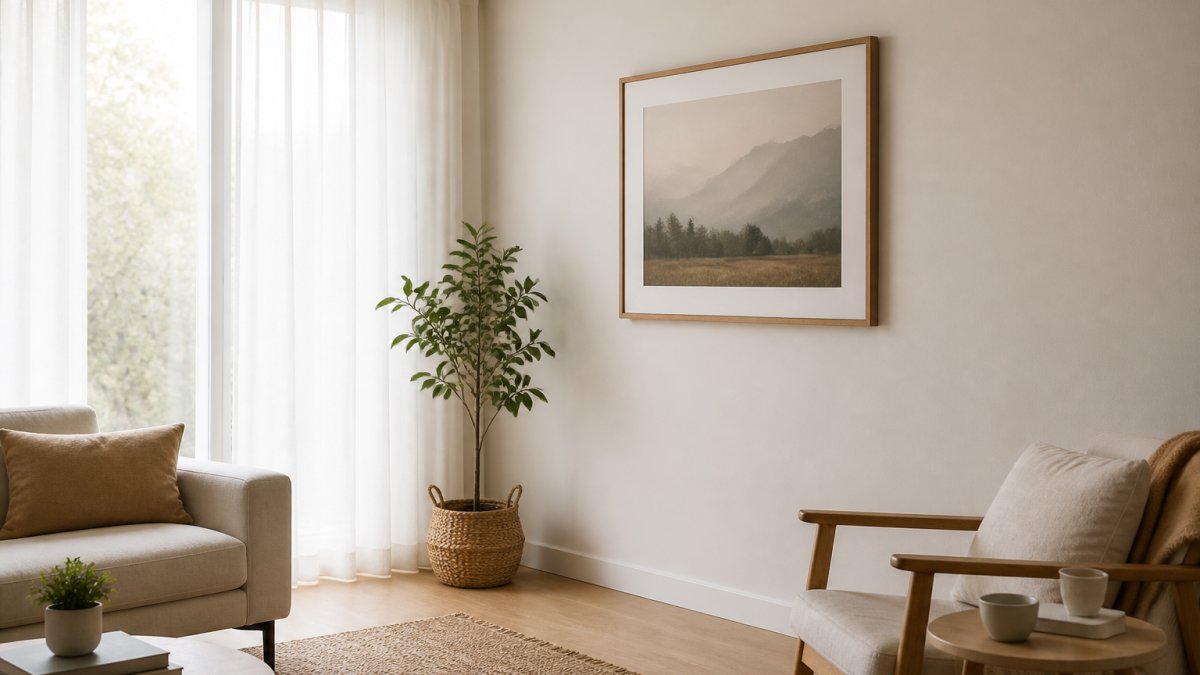
Rotate pieces, too. Moving a print to a cooler wall every few months spreads the exposure around.
How to Store Fine Art Prints Safely
Store fine art prints flat, dark, cool, and dry. Light, heat, and moisture are the three things that ruin stored work, and a closet shelf can deliver all three if you're not careful.
Handle carefully every time. A crease or fingerprint is permanent damage that no glazing can fix later. The National Archives guidance on preserving family papers and artwork recommends acid-free materials and stable, moderate conditions for long-term storage.
Comparing Protective Options: Effectiveness, Trade-offs, and Cost
No single option wins on every front. The right pick depends on your room, your budget, and how valuable the print is to you.
| Option | Effectiveness | Trade-off | Cost Level |
|---|---|---|---|
| UV-filtering glass | High UV block, no visible-light block | Heavier, costs more | Medium to high |
| UV-filtering acrylic | High UV block, lighter weight | Can scratch more easily | Medium |
| Archival framing materials | Protects paper long-term | Doesn't block light on its own | Medium |
| Window blinds or curtains | Cuts visible light and heat | Changes the room's look | Low |
| Interior wall placement | Removes direct sun entirely | Limits where art can go | Free |
| Rotation and storage | Spreads exposure over time | Takes ongoing effort | Free |
Choosing the Right Print and Framing for Sunlight Damage Protection
Some prints resist light better than others, and the framing you choose decides how much protection they get. Paper, ink, and printing process all play a part, and most guides treat them as one category.
Print-specific risks by ink
- **
- **
- **
If you are buying a print specifically for a bright room, ask the seller whether the ink is pigment or dye. That single question matters more than most framing upgrades.
Print-specific risks by paper and substrate
- **
- **
- **
- **
Framing choices that actually help
- UV-filtering glazing on every piece
- Acid-free mats and backing so the paper is not attacked from behind
- A sealed frame back to keep out dust and pests
- Spacers so art does not touch the glazing, which prevents condensation transfer and abrasion
- Hanging hardware rated for the frame's weight, so the piece does not shift and flex
Matching the print to the room
At Mind-Meld Gallery, we offer fine art prints, print framing, canvas, acrylic prints, and metal prints, and a money-back guarantee.
The Getty Conservation Institute resources on preventive conservation sums up the principle well: control the environment first, and treat protective products as a backup, not a cure.
Frequently Asked Questions
Does sunlight damage fine art prints?
Yes. Ultraviolet light and visible light both cause fading, discoloration, and paper degradation. UV radiation breaks the chemical bonds in pigments and inks, while visible light and heat accelerate the process. Damage is cumulative and irreversible, so a print exposed to a few hours of indirect sun each day will fade faster than one kept in a dim hallway. Even short bursts of direct sunlight through a window can cause noticeable color shift within months.
Does UV-protective glass prevent prints from fading?
UV-protective glass and acrylic block most ultraviolet light, but they do not stop visible light from fading pigments. They slow the process significantly, especially for prints on archival paper with pigment inks, but a framed piece in direct sun will still degrade over time. Pair UV glazing with a shaded hanging location and window coverings for the best protection. No glazing replaces the need to control light exposure.
Where should I hang art to avoid sun damage?
Hang prints on interior walls that receive indirect or reflected light, away from south- and west-facing windows that get strong afternoon sun. Avoid walls directly opposite windows and spots where sunlight falls across the surface for hours. A hallway, interior stairwell, or wall perpendicular to a window is usually safer. Use curtains, blinds, or UV window film on nearby windows, and rotate pieces periodically so no single print takes the full exposure.
How should I store fine art prints to prevent fading?
Store prints flat in acid-free archival boxes or folders, interleaved with archival tissue, in a cool, dark, dry space. Avoid attics, basements, and garages where heat and humidity fluctuate. Keep stored prints away from windows and fluorescent lighting, and never stack unprotected prints directly against each other. Handle prints with clean cotton gloves, and check stored pieces every few months for discoloration, foxing, or warping so problems are caught early.
Sunlight damage is quiet, cumulative, and permanent, which is exactly why it's worth planning for before you hang a single piece. Mind-Meld Gallery helps you get it right from the start, with UV-friendly framing, archival materials, and print types built for real rooms, plus a money-back guarantee for peace of mind. Get started with Mind-Meld Gallery and hang your art with confidence.
